voxanimus said:
hardeep_singh said:
voxanimus said:
hardeep_singh said:
voxanimus said:
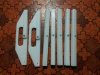
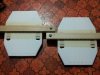
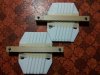
those pieces look really thin man; do you join together two face-to-face to increase the thickness?
thinner = lighter
0.25" is all u need when it comes to plastic
yeah but thinner also = more brittle and less clacking noise
lol your knowledge of materials science is lacking
not really; with regards to one particular substance, a thicker piece will always be less fragile than a thinner piece. however, i'm not sure of the comparative strengths of wood and whatever plastic composite you used for the saaps.
first you say brittle then you bring up strength(fragile), i'm not trying to be condescending but you really don't know much about materials science. read up on it if you want better insight, the equations for stress distribution and mechanical properties under different loading circumstances are complicated but the basic ideas are pretty straight forward.
brittleness is a property of chemical composition. you cannot change the brittleness of a material by modifying its physical dimensions. if you're a smartass and you know about machining you'll probably bring up the fact that the properties of a metal piece will change if it's machined(physical dimensions are modified) this is due to heating caused by friction of the machining process, which is why coolant is usually used when machining metal pieces.
clacking noise - every material has a natural frequency, which is a property of its density and chemical structure. vibration due to impact create clacking noise and yes the loudness will change depending on the surface area being impacted. if the surface area is smaller the loudness of the clacking will decrease. like i said previously the frequency of a material is dependent on its density, the density of HDPE(high density polyethylene) is 0.941 g/cc where as most saaps are made out of wood that has densities from 0.6 to 0.8 g/cc, which means that wood will "clack" at a lower frequency than HDPE. HDPE and other types of plastics have a sharper noise than wood. since HDPE has a higher density and a stronger chemical structure than wood, it also deforms less than wood does under similar impacting, physical deformation absorbs impact energy, because HDPE deforms less than wood more of that impact energy is transmitted as vibrations through the material, which leads to louder noise.
a thicker piece is not always less fragile than a thinner piece. everything is dependent on loading(linear, axial, compressive, shear, tensile, torsional) and shape of the piece. none of this is a factor when making saaps because none of the members(pieces) are ever under a load during normal use unless ur opening the saap up and flexing it outwards on purpose. ive stated before a couple of times that saap failures are cause by stress fractures in the wood, usually caused by screw threads rubbing against the holes, which spread along the grain because of deformation caused by repeated impact(this deformation can also have other factors associated because wood deforms due to temperature change and humidity change). which is why i plan on sticking with plastic materials, no grain structure, low deformation due to impact, less susceptible to environmental changes. the impact forces of using a saap are not enough to cause instant failure as long as there are no pre-existing defects.